
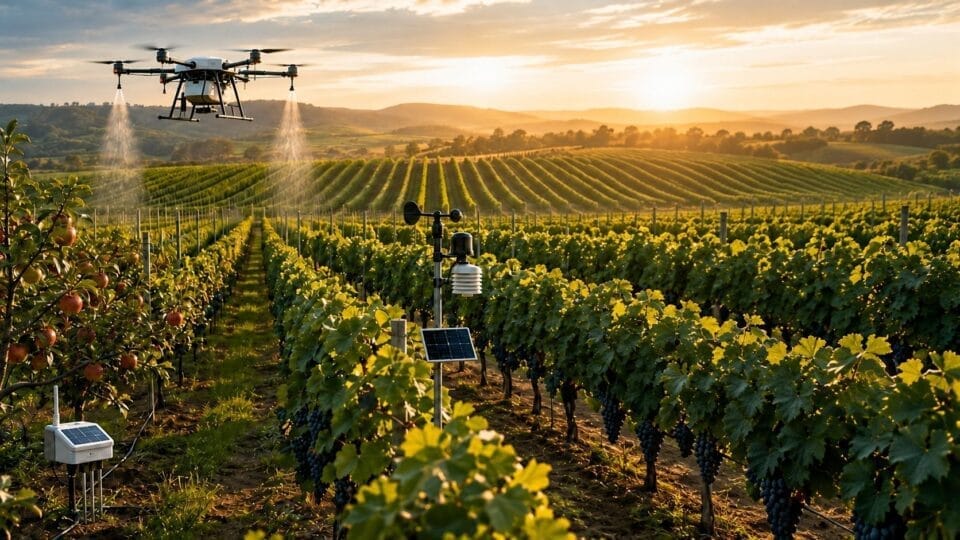
A five-day study tour showed that water efficiency, digital monitoring, biological crop protection and modern infrastructure deliver the greatest impact when they operate as an integrated system—from the root zone to buyer requirements.
15–19 June 2026 • Moldova • FAO/EBRD project • supported by FARM
The tour produced a tangible result almost immediately. After returning to Uzbekistan, one participant, Rustam Yakubov, replaced his sprayer nozzles with more efficient ones and reported that water use had been cut in half. This example captures the logic of the entire programme: change does not always begin with a major investment. Small, well-chosen technical improvements can sometimes deliver rapid gains, after which a farm can move on to more sophisticated management systems.
The tour brought together nine fruit and vegetable producers from Uzbekistan. Rather than demonstration sites, they visited commercial farms in full operation, where they could see results and discuss implementation costs, maintenance, risks and payback periods. The overview video brings together the main episodes of this practical exchange: Elit-Fruct’s super-intensive orchards, subsurface drip irrigation, Prodcar’s intensive sweet cherry orchard, Terra Vitis’s digital vineyard, export-oriented shallot production and the potential of agricultural drones.
Greening as a business model, not a separate cost item
A central conclusion of the tour is that economic and environmental sustainability increasingly reinforce one another in the modern fruit and vegetable business. Saving water and fuel reduces production costs. More precise crop protection cuts unnecessary treatments and reduces the risk of exceeding buyers’ pesticide-residue specifications. Managing crop load and microclimate increases the share of marketable output and reduces losses. Digital data enable timely decisions instead of compensating for delays with additional expenditure. Together, these measures reduce business risk and therefore improve producers’ access to finance.
Buying a sensor, drone or irrigation system does not, however, guarantee results. In every successful example, technology is embedded in a management cycle: measure, interpret, decide, verify the result—and only then scale up. This discipline is what distinguishes precision agriculture from the mere purchase of equipment.
 Water must reach the roots—exactly when it is needed
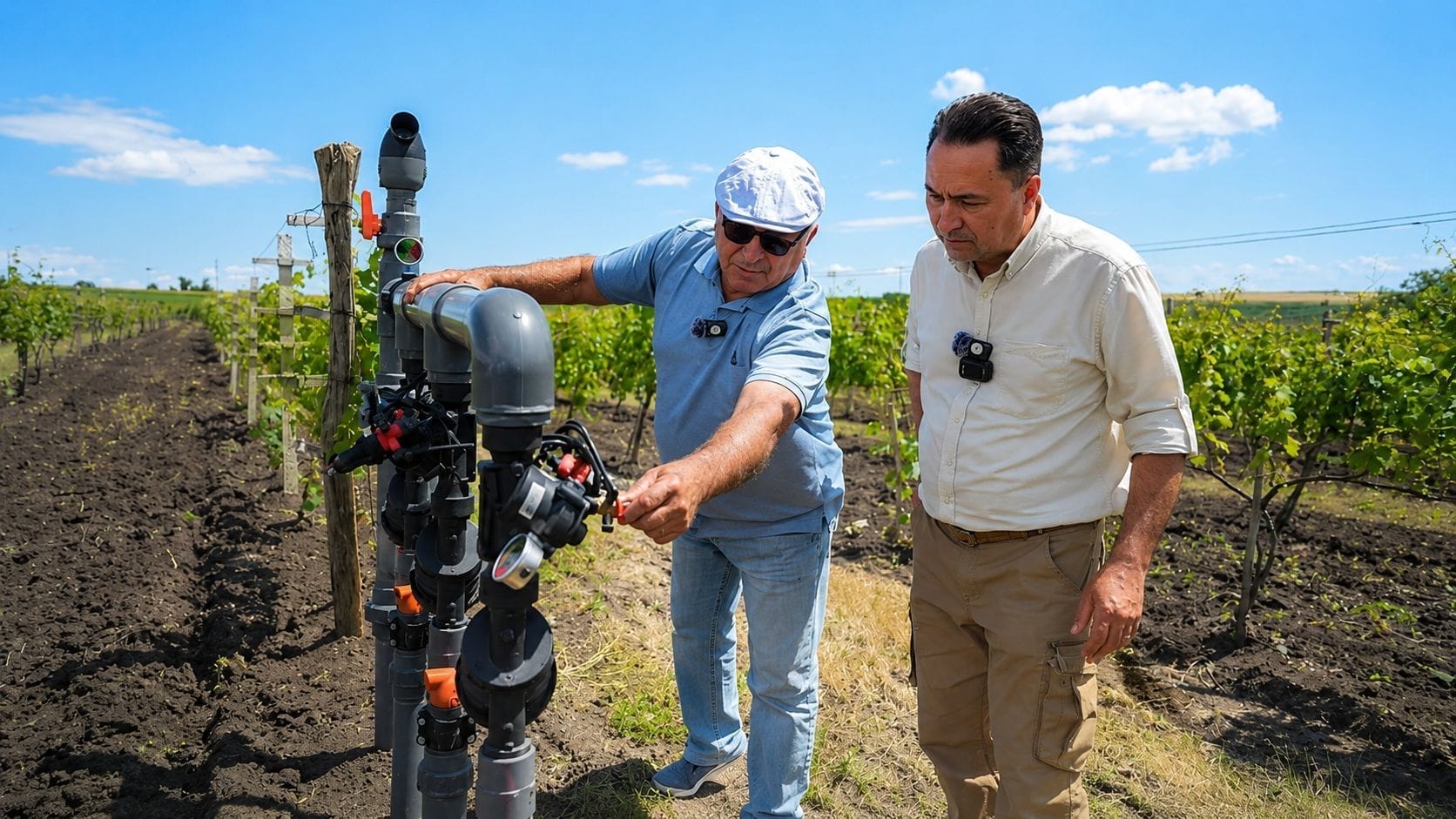
For Uzbekistan, the clearest priority is more efficient water use. At Ion Cebanu’s farm in Moldova, participants saw subsurface drip irrigation in practice: laterals are installed at a depth of about 40 cm, delivering water and nutrients directly to the root zone. This reduces evaporation losses, limits the water available to weeds and lowers the risk of damage to the lines by animals or machinery.
The technology matters not only as a means of saving water. Deeper wetting encourages roots to develop in lower soil horizons and can improve plant resilience to heat and drought. Its performance nevertheless depends on system design, soil type, water quality, drainage, leaching practices and maintenance. Subsurface irrigation should therefore be tested on the specific site and supported by monitoring, rather than treated as a universal solution.
At Terra Vitis, participants saw the next level of water management: sensors measure soil water tension at depths of 30 and 60 cm. The farm uses these data to avoid irrigating too early while preventing plant stress. What matters is not a single reading, but calibration for the specific soil, crop and emitter placement.
 A weather station should earn its keep—not merely display the temperature
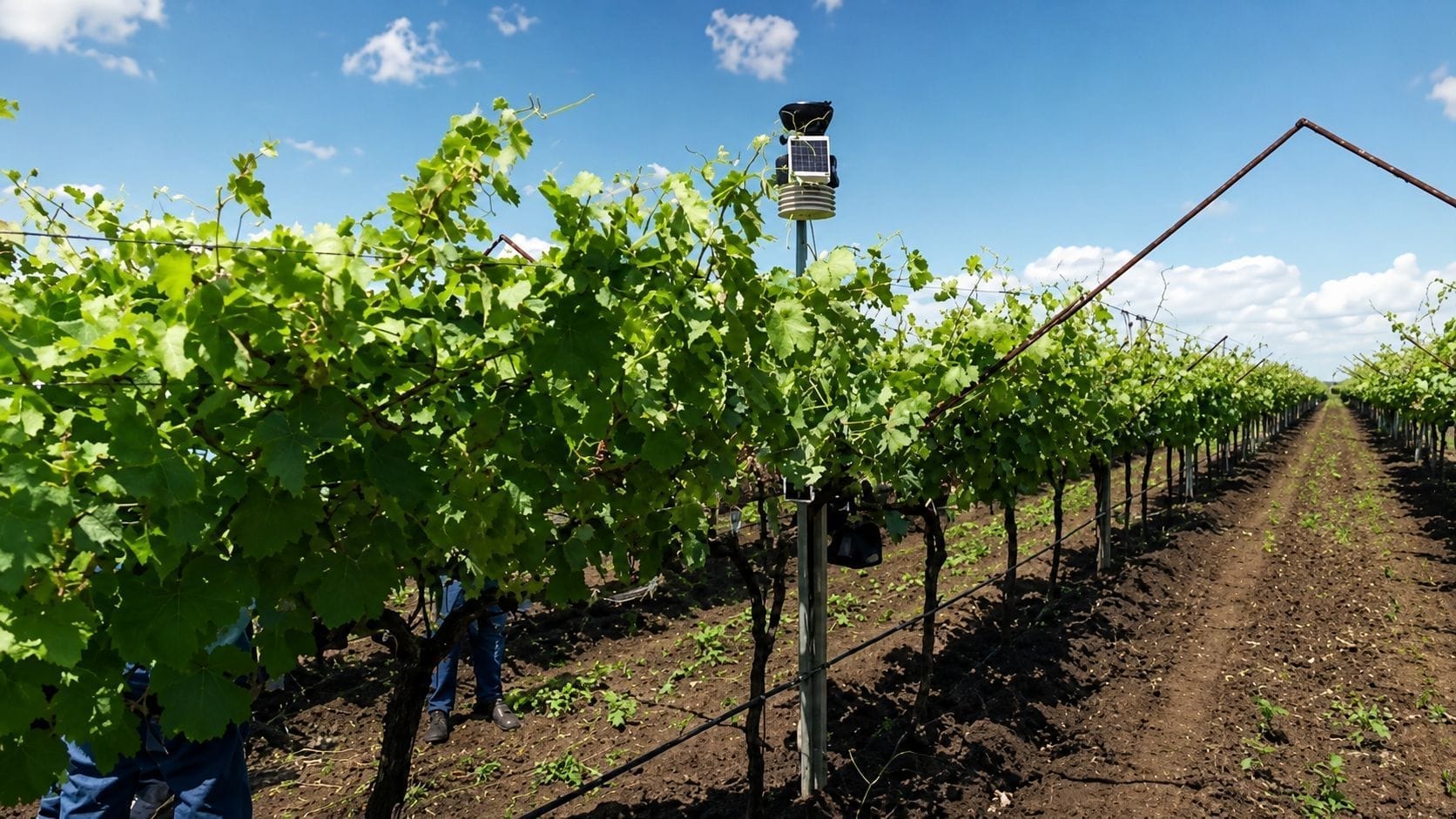
Several Uzbek farms already have weather stations, but use them mainly as expensive thermometers. In Moldova, participants saw a different approach. Data on temperature, rainfall, humidity, wind and leaf wetness are combined with disease and pest-development models. At Elit-Fruct, the weather station is linked to the RIMpro forecasting system, helping the farm assess infection risk and identify a narrow window for effective treatment—for example, after daytime temperatures fall but before dew forms.
At Terra Vitis, weather data are complemented by pest-development models and camera traps. Images of insects are sent to a phone, making it possible to track flight dynamics and time interventions more precisely. The system does not replace the agronomist: it provides an alert, which the specialist evaluates against field scouting, economic thresholds, the weather forecast and the spray history.
In practice, such a system means fewer calendar-based treatments, lower use of crop-protection products, labour and fuel, more effective protection and less risk of unwanted residues in the produce. This is where digitalisation directly connects greening with export competitiveness.
 Large sweet cherries: maximising market value, not total yield
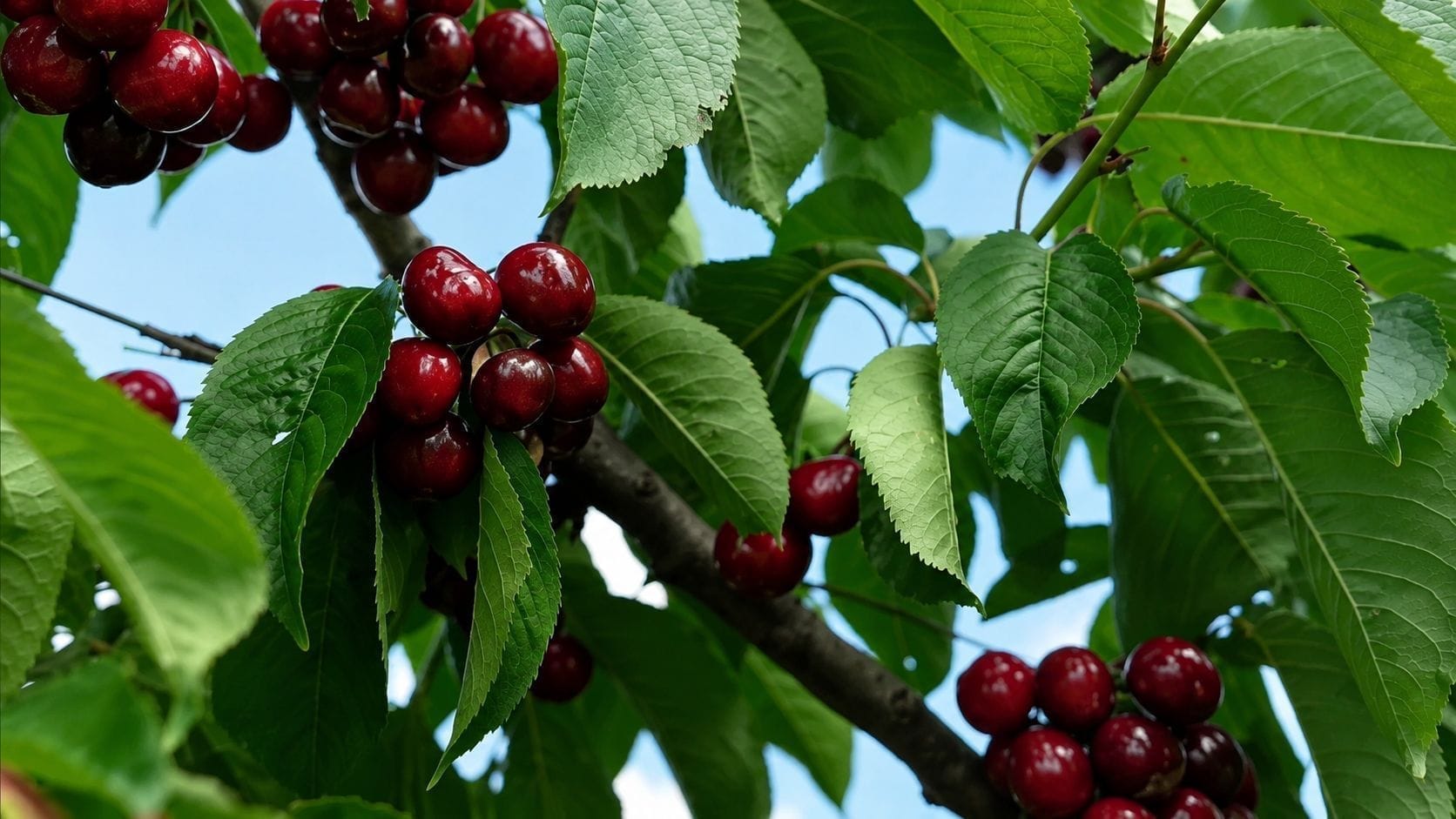
At Prodcar, participants explored intensive production of large-sized sweet cherries. The commercial target is to consistently produce fruit of about 28 mm or larger, because prices for large cherries can differ substantially from those for smaller fruit. This changes the objective of orchard management: the aim is not to harvest the greatest possible number of fruit, but to maximise the share of uniform produce of the required size and quality.
Crop load is regulated as early as flowering and, where necessary, supplemented by manual thinning. UFO and spindle training systems, rootstock and cultivar selection, biostimulation, precision irrigation, protection from rain, hail, heat and insects, disease monitoring, grading and residue control all form part of one integrated system. An intensive orchard of this kind is, above all, a risk-management system.
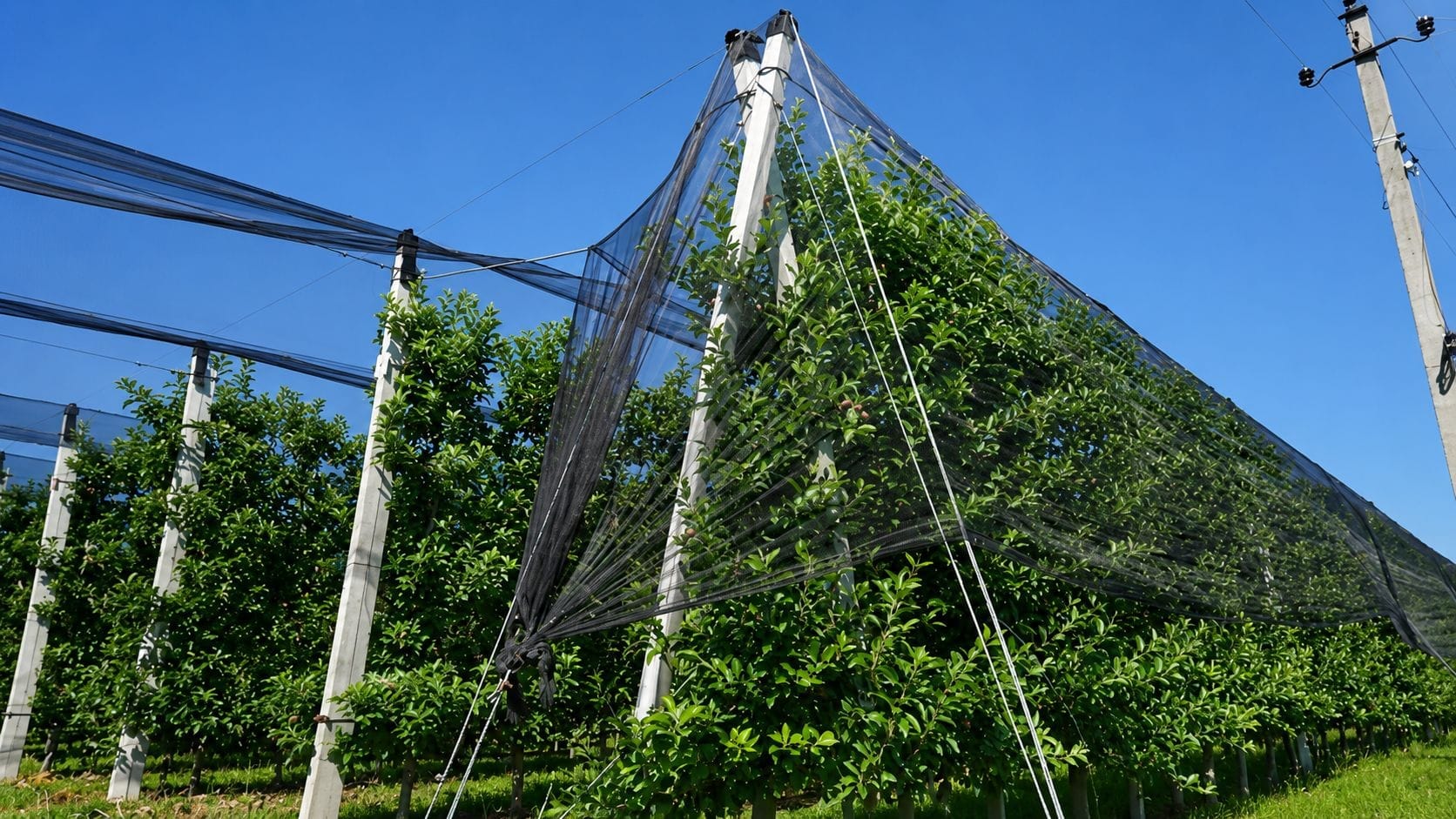
The farm does not describe its produce as organic. Its goal is different: to minimise the use of synthetic products, the number of detectable active substances and their residue levels while maintaining effective crop protection. Biological and physical methods are used, including microbial products, pheromone-based systems and fine-mesh netting. The reference in the video to four or five active substances must be interpreted correctly: this is a specification applied by certain buyers and retail programmes, not a single legal requirement across the EU.
 The digital vineyard: cultivar, training system and market must be aligned
Terra Vitis in southern Moldova shows how cultivar trials can become part of a commercial strategy. The farm maintains a collection of more than 130 table-grape cultivars. They are assessed not only for flavour and appearance, but also for adaptation to the local climate, labour requirements, transportability, shelf life and storage potential.
Vertical, Y-shaped and pergola training systems are compared. According to the farm, expanding the leaf area increased yields by 30–40%, while combining the new structure with irrigation enabled one plot to produce 35–42 tonnes per hectare for six consecutive years. This is a result achieved by one farm, not a universal benchmark: it depends on the cultivar, crop load, light, nutrition, water and management quality.
Rain covers and anti-hail netting protect late-season grapes from cracking and rots, but they also alter the microclimate and pesticide-residue behaviour. Protective infrastructure therefore requires the entire crop-management programme to be adapted. Terra Vitis’s most useful principle is to test locally first, measure the outcome and only then scale up.
 Agricultural drones: major potential, but not a ready-made crop-protection programme
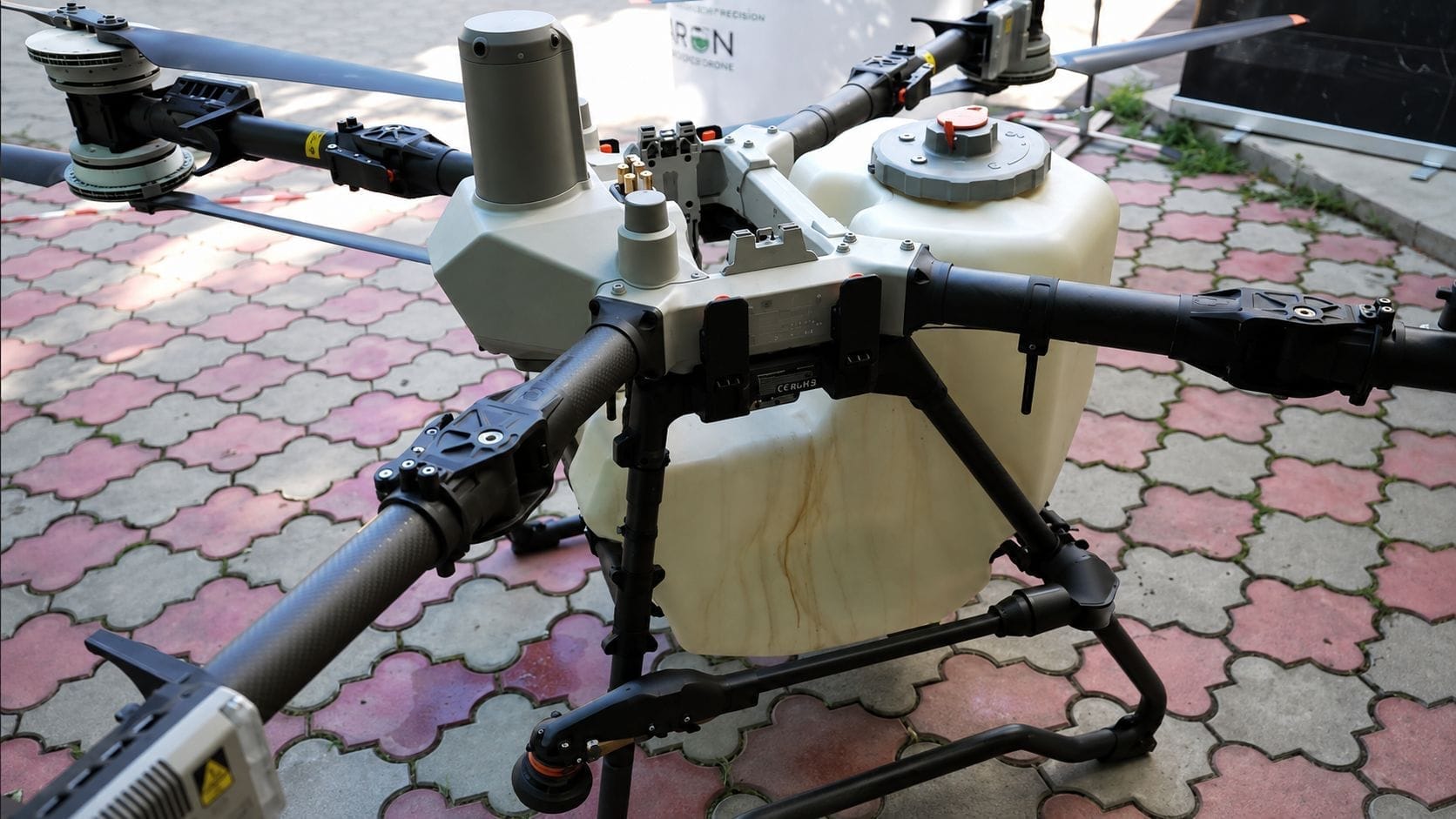
Agricultural drones attracted particular interest from participants. LiDAR helps map canopy structure; multispectral imaging can identify stress zones, assess flowering intensity and estimate the size of each tree; and variable-rate application can target only the areas that need treatment and even out orchard performance to optimise yield and quality. A drone can treat a field after rain when wheeled machinery cannot enter, operate at night, reduce fuel use and workers’ exposure to crop-protection products, make agricultural jobs substantially more attractive and create opportunities to engage younger workers.
The main current constraint is the shortage of officially approved protocols for many crops, products, concentrations, spray volumes and application parameters. The technical ability to lift a sprayer into the air does not by itself ensure safe and effective crop protection. Scaling up in Uzbekistan will require not only regulatory changes, but also trials conducted jointly with the relevant authorities, research institutions and producers.
 Technology does not end in the field—it ends with the buyer
The tour also showed that production efficiency does not automatically translate into a higher price. The cultivar must withstand logistics; each lot must be uniform; cooling must be rapid; grading and packaging must meet buyer expectations; and product safety and origin must be documented.
The shallots grown by ARHIR ION are a case in point. Their yield is lower than that of ordinary bulb onions, but the crop is produced for an export market, harvested mechanically, graded, packed and shipped to Romania. The higher price comes not from the crop itself, but from precise niche selection and the organisation of the entire supply chain.
Access to more demanding and potentially higher-value markets therefore cannot be reduced to certification or a single technology. It requires reliable volumes, consistent quality, traceability, compliance with specifications, dependable logistics, marketing and long-term buyer relationships. A higher price is a possible outcome of this system, not a guaranteed premium for greening alone.
Next steps
The tour’s main value is that the knowledge gained will not remain with its nine participants. From October to December 2026, a series of events will be held in Uzbekistan with government institutions, sector associations and the private sector. The project team and tour participants will share practical information gathered in Moldova: which solutions merit testing, how to assess their economics, what conditions are required for adoption and what limitations need to be considered.
The next stage aims to accelerate the transition to more economically and environmentally sustainable practices in production, post-harvest handling and marketing of fruit and vegetables. This should help farms use water, energy, fertilisers and crop-protection products more efficiently, improve product quality and safety, and expand exports to more demanding countries where meeting specifications opens access to higher-priced segments than those available in traditional markets.
The project team will also demonstrate how the technologies reviewed can help Uzbekistan meet the ambitious targets set out in its Nationally Determined Contribution (NDC 3.0). This evidence can undoubtedly support the adaptation of agricultural policy solutions.
Ultimately, this is not only about technology and exports. More profitable and resilient farms create demand for skilled labour, services, storage, packaging, logistics and processing. Systematically improving the competitiveness of the fruit and vegetable sector can therefore become one of the tools for raising incomes and well-being in Uzbekistan’s rural communities.
About the study tour
The study tour was organised on 15–19 June 2026 under the FAO/EBRD Agrifood Sector Climate and Environmental Resilience Initiative, subcomponent 2.2.3, ‘Greening Uzbekistan’s Fruit and Vegetable Value Chain’, with support from the Federation of Agricultural Producers of Moldova (FARM).
Further reading
- Overview of the tour and participants’ first steps after returning home
- Terra Vitis’s digital vineyard
- Large sweet cherries and biological crop protection
- Agricultural drones in fruit and vegetable production
- Subsurface drip irrigation in fruit production
- Smart-orchard practices at Elit-Fruct
The use of the site materials is free if there is a direct and open for search engines hyperlink to a specific publication of the East-Fruit.com website.