
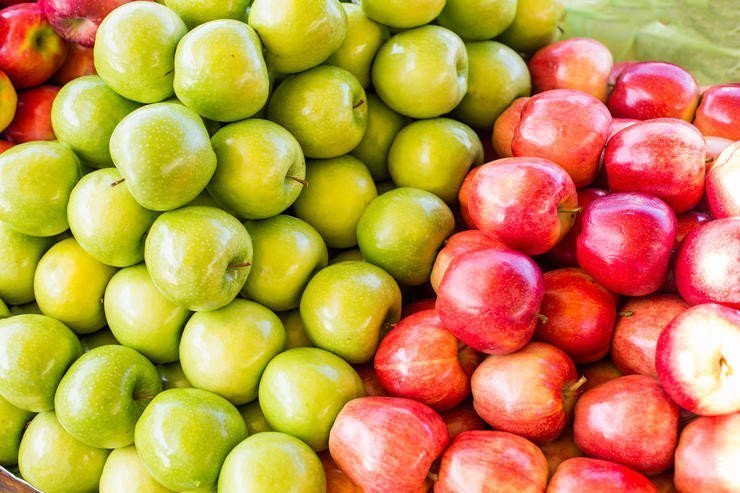
According to the October forecast by Agreste, France’s statistical service, apple production in 2026 is expected to reach 1.365 million tonnes, down 15% from the previous year and 10% below the average for the past five years, reports EastFruit, citing Fruitveb.
The decline is due to a combination of factors: summer heatwaves restricted fruit growth, alternate bearing following the abundant 2025 harvest affected yields, and the area under apple orchards shrank by 3% to 36,700 hectares.
Although more than 80% of French apple orchards are equipped with irrigation systems, extreme temperatures negatively affected fruit size and yields. As a result, production is expected to decline across all major growing regions.
The steepest drop is forecast in the Auvergne-Rhône-Alpes region, where the harvest could be 25% lower than last year. Production is expected to fall by 23% in the Loire Valley, 16% in Centre-Val de Loire, 14% in Occitanie, and 13% in Limousin. In Provence-Alpes-Côte d’Azur, output could decrease by 7%.
The heat also affected fruit quality. In the Loire Valley, early-season varieties had to be harvested earlier than usual due to accelerated ripening. Orchards experienced smaller apples, increased fruit drop, sunburn damage, and poor coloration. High temperatures also increased the proportion of small fruit and harvest losses in other regions. Some sunburned apples, particularly in Limousin, are likely to be sent for processing rather than sold on the fresh market.
Read also: France’s Grape Harvest Starts at a Record-Early Date Due to Heat
Among the major varieties, Gala is expected to suffer the sharpest decline, with production potentially falling by 23% year on year. Granny Smith output is forecast to decrease by 17% compared with 2025, while Golden production is expected to drop by 11%.
The tighter supply is already affecting prices. In September 2026, French producer prices for apples were 8% higher than a year earlier and 11% above the average for 2021–2025.
Meanwhile, active apple sales began later than usual this season. Unseasonably warm weather sustained domestic demand for summer fruit, particularly peaches, plums, and grapes, delaying consumers’ shift to autumn produce.
The use of the site materials is free if there is a direct and open for search engines hyperlink to a specific publication of the East-Fruit.com website.