
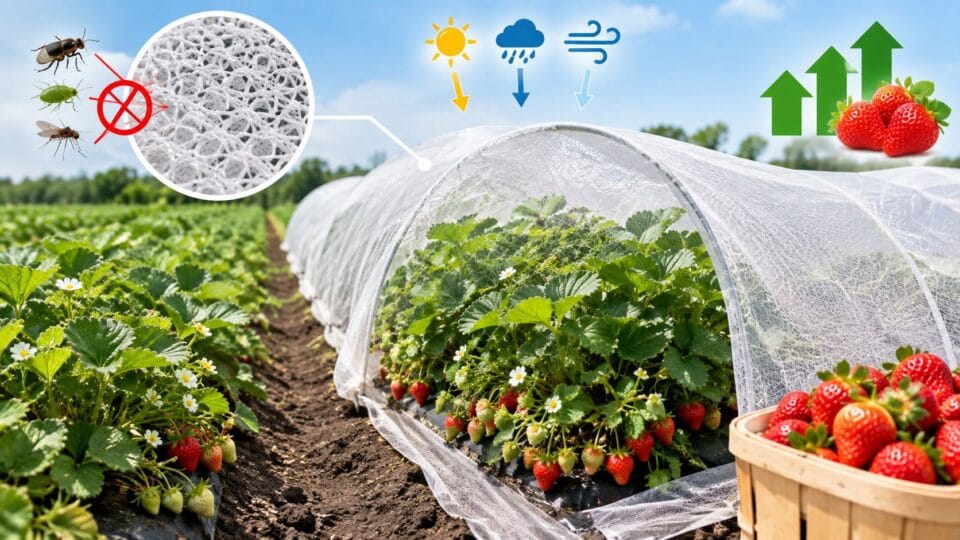
A new protective fabric called Plant Armor increased strawberry yields by up to 3.56 times compared with uncovered plants. At the same time, the material allows light, rain, and air to reach the plants and could reduce the need for pesticides and irrigation, EastFruit reports, citing ScienceDaily.
The technology was tested on strawberries under field tunnel conditions at North Carolina State University (NC State University). The fabric’s three-dimensional structure creates a physical barrier against insects while maintaining plants’ access to essential resources. Researchers found no negative effects of the covering on plant health, light levels, or relative humidity.
The researchers also noted that Plant Armor creates a more stable thermal environment. As a result, plants accumulate the required amount of growing degree days faster and begin fruiting earlier.
According to the study authors, physical protection against insects could potentially reduce the use of conventional insecticides. The fabric may also contribute to more efficient water use.
Interestingly, the technology was originally developed for a completely different purpose and was not intended for agriculture. The idea emerged from research into military clothing, as scientists were looking for ways to protect military personnel from mosquito bites while making body armor more comfortable to wear.
The study results were published in the journal Agriculture. Plant Armor Gen 2 fabric has been patented by North Carolina State University and licensed for commercial use.
The use of the site materials is free if there is a direct and open for search engines hyperlink to a specific publication of the East-Fruit.com website.