
Resistance to ToBRFV, the ability to withstand extreme heat and consistent yields are becoming key requirements for new tomato varieties. However, breeders must not only protect crops against diseases and climate stress but also preserve the flavour qualities of the fruit, reports EastFruit.
Marie Vendercoille, tomato crop portfolio lead at Gautier Semences, discussed how these requirements can be combined in an interview with Fruitnet.
According to Vendercoille, resistance to tomato brown rugose fruit virus (ToBRFV) has significantly reshaped breeding programmes in recent years. At the same time, new varieties must maintain high marketable yields, fruit quality and ease of crop management.
Particular attention is also being paid to climate resilience. The extreme heat experienced in recent seasons has highlighted the importance of reliable fruit setting, balanced plant development and consistent fruit size, even under high-temperature conditions.
New ToBRFV-resistant varieties
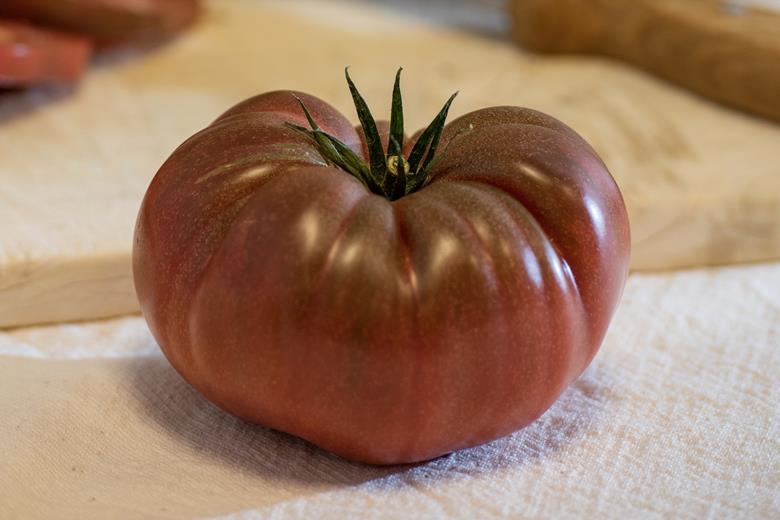
Among Gautier Semences’ latest developments are Marmoka, a black ribbed tomato, and Marbria, a red ribbed variety. Both offer high resistance to ToBRFV.
Marmoka stands out for its high and consistent marketable yield, good plant vigour under hot conditions and uniform fruits weighing 250–300 g. The tomatoes have a deep dark colour, juicy flesh and pronounced aromatic intensity.
Marbria combines early maturity, consistent production and good fruit-setting ability. Its ribbed fruits also weigh 250–300 g and are characterised by a tender texture, juiciness and rich flavour.
To assess consumer appeal, the company conducts comparative sensory evaluations, analysing the texture, juiciness and aromatic profiles of its new varieties.
Diversity is becoming a competitive advantage
When developing new varieties, breeders must consider the requirements of the entire supply chain. Growers need consistent yields and ease of crop management, while supply chain operators require uniform fruit size, attractive appearance and good shelf life. For consumers, flavour, convenience and product diversity remain the main priorities.
Consumer preferences also vary considerably between countries. Alongside traditional tomatoes, demand is growing for cherry, coloured and ribbed varieties, as well as products with distinctive flavour characteristics.
According to Vendercoille, the role of breeders is not to standardise the market offering but to develop varieties tailored to the needs of individual markets.
The future growth of the tomato business will depend on the industry’s ability to combine production resilience, economic efficiency and high product quality. Preserving flavour and varietal diversity will remain essential to creating lasting value for consumers.
Photo: Gautier Semences
The use of the site materials is free if there is a direct and open for search engines hyperlink to a specific publication of the East-Fruit.com website.